








Dr. Hugh Cutcher
November 18, 2026
Share this post
North American irradiance remained close to normal overall in October, but the continental average concealed sharply contrasting conditions for solar assets. Global Horizontal Irradiance (GHI) was 0.8% above normal across North America, while the Great Lakes and Northeast recorded substantial irradiance surpluses and the Southwest and northern Mexico experienced widespread deficits during an unusually wet month, according to analysis using the Solcast API.
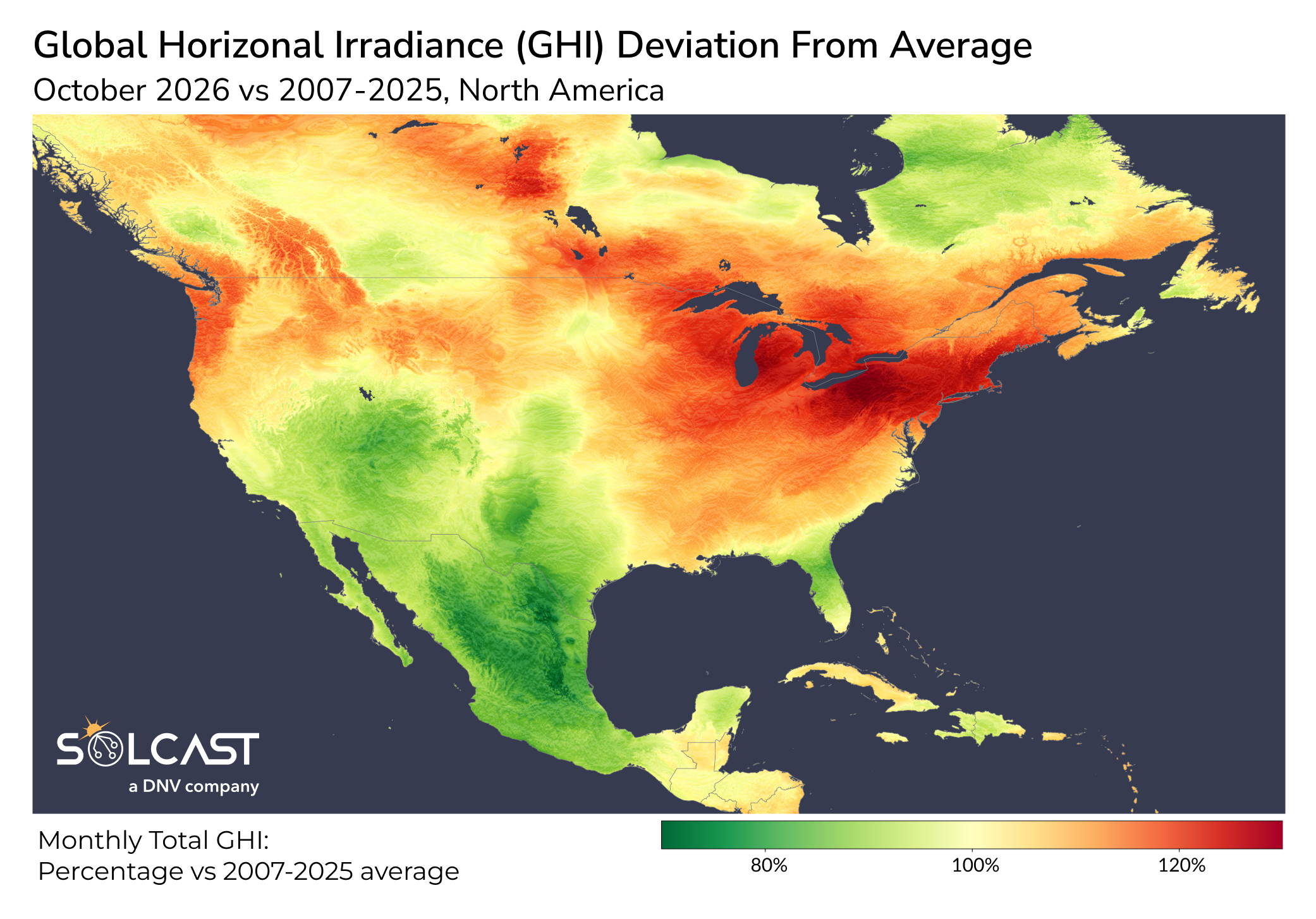
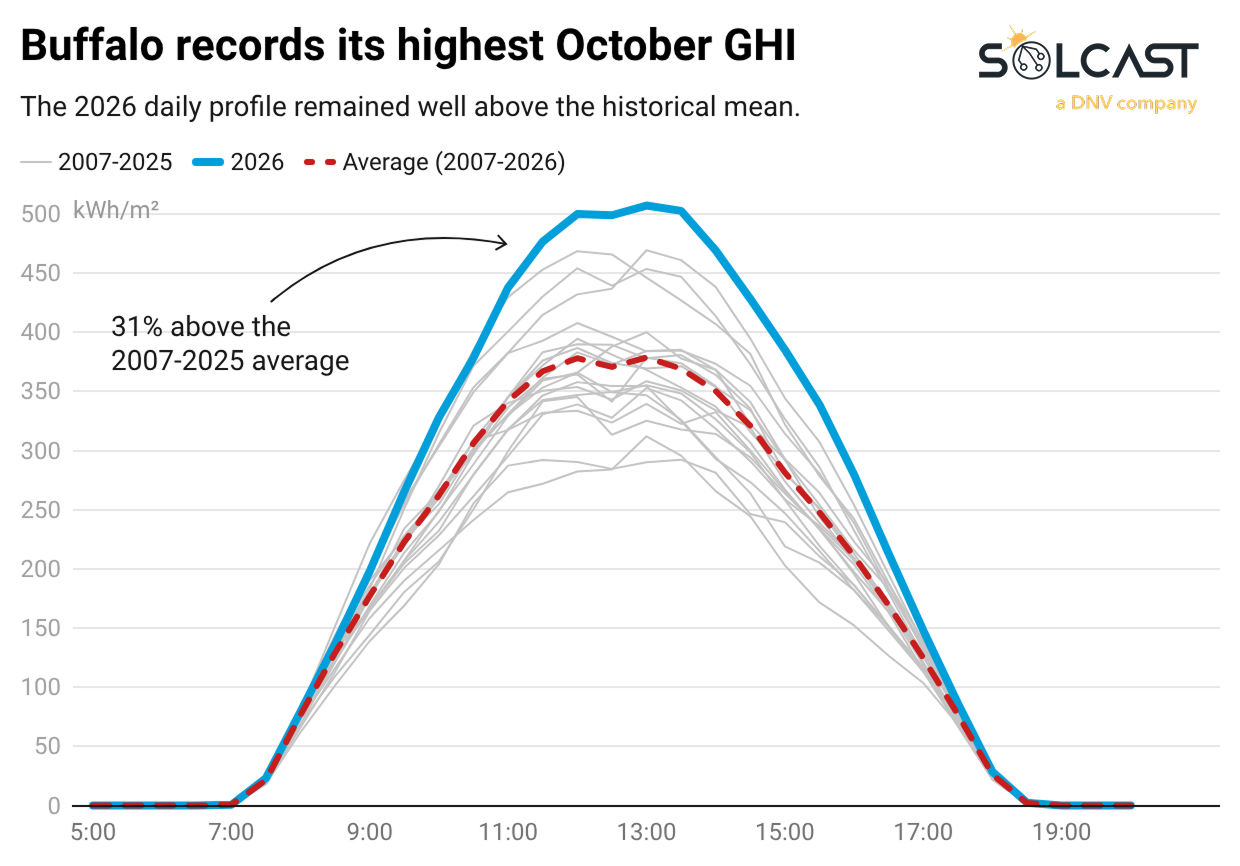
Across the Northeast and Great Lakes, October GHI averaged 14% above normal, with 95.5% of the region recording above-average irradiance. The largest anomalies occurred around Upstate New York and parts of Michigan, where GHI was approximately 20-25% above normal. Higher atmospheric pressure, lower humidity and below-normal precipitation across much of the region reduced the frequency of cloudy periods, allowing more solar radiation to reach the surface. Buffalo recorded the strongest October GHI in its 2007-2026 series, illustrating the scale of the regional surplus.
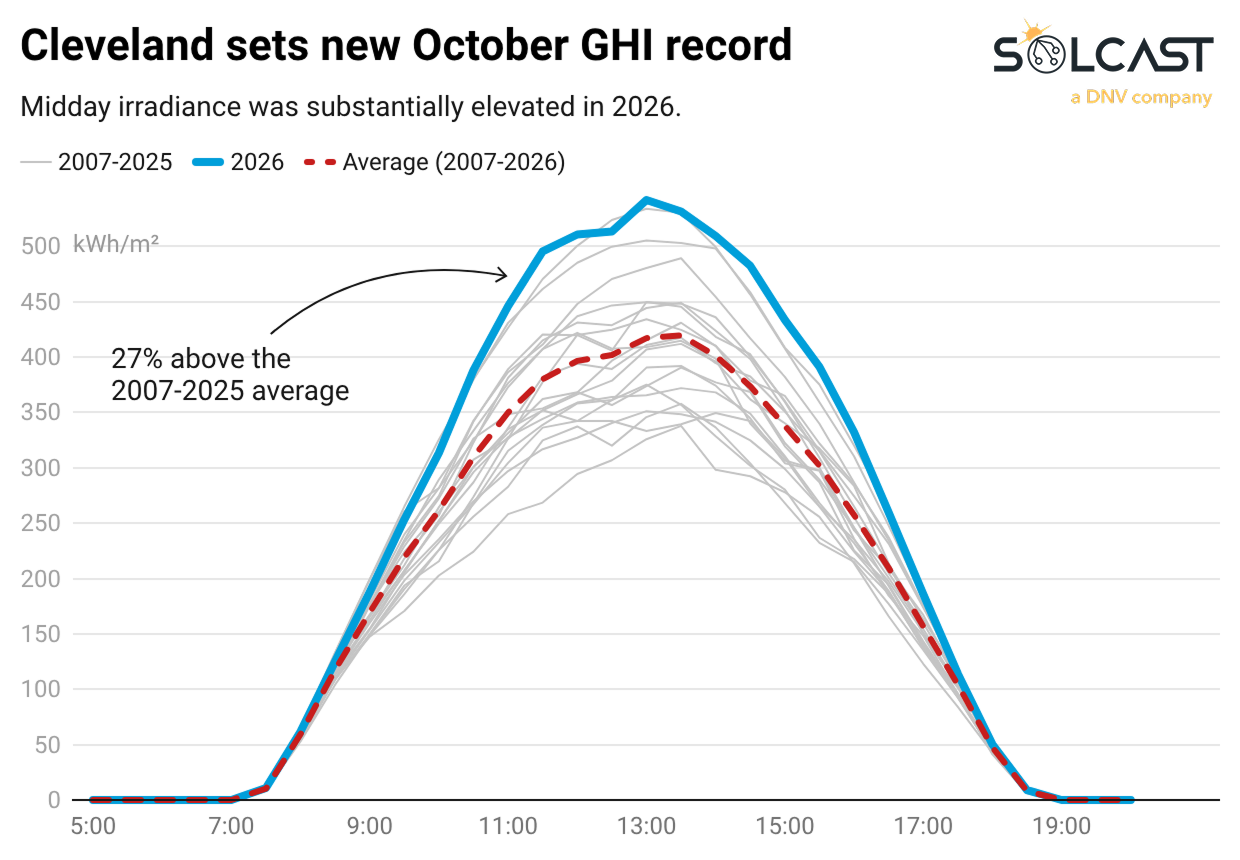
Cleveland experienced a similarly exceptional month, with its average daily profile also setting a high for the city in the Solcast record.
These conditions were particularly relevant across the Northeast, where significant volumes of distributed solar are installed in states including New York, New Jersey and Massachusetts.
Conditions were markedly different farther southwest. A strong low-pressure trough approaching the West Coast drew Pacific moisture into the Four Corners where Arizona, Colorado, New Mexico and Utah meet. Moisture associated with Tropical Storms Polo and Trudy, also contributed to several days of heavy rainfall throughout the month of October. The San Luis Valley received more than four times its usual October rainfall in four days, while the San Juan River at Pagosa Springs reached its second-highest crest since 1911.
Elevated atmospheric moisture extended across much of the Southwest and northern Mexico, increasing cloud cover and coinciding with a broad irradiance deficit. GHI across the region averaged 9% below the October norm. Phoenix recorded GHI approximately 10% below its 2007-2025 October average, making October 2026 the second-lowest October for GHI in the Solcast record.
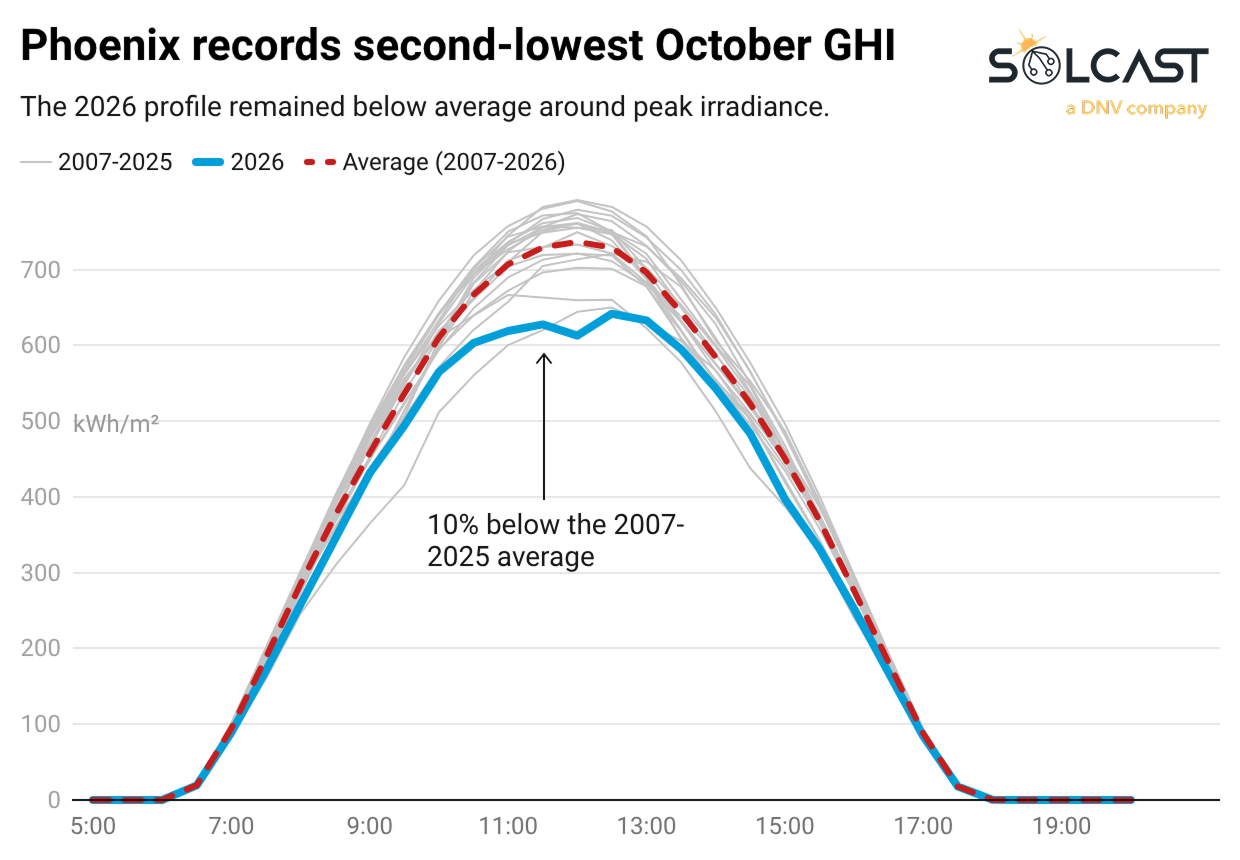
The below-normal conditions covered the solar-intensive corridor from Southern California into Arizona, exposing a substantial concentration of utility-scale solar assets to the same regional irradiance deficit.
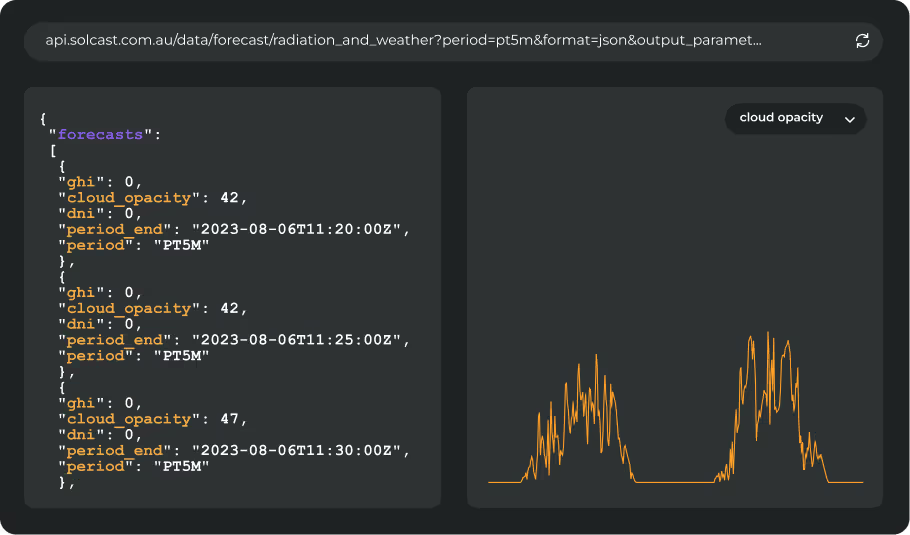
Track weather conditions, cloud movements, and irradiance-influencing factors that might impact your solar generation. Access bankable actuals and accurate forecasts when you sign up for a Solcast API toolkit. You can reach out to our team for an extended trial.

