








Dr. Hugh Cutcher
October 29, 2026
Share this post
Across South America as a whole, September irradiance was close to normal, but the total average hides a sharply divided month, according to analysis using the Solcast API. Persistent cloud and exceptional rainfall pushed global horizontal irradiance (GHI) 20–24% below the 2007–2025 normal across southeastern Brazil. The Patagonian Steppe and Tierra del Fuego ran close to 19% below normal, while most of the north of the continent was sunnier than usual. A rapidly strengthening El Niño was an important large-scale influence, reshaping rainfall, drought and cloud patterns from the Amazon Basin to Patagonia.

The Brazilian irradiance deficit was centred on São Paulo state, extending to Rio de Janeiro, coinciding with unusually wet conditions. Rio de Janeiro recorded its wettest September since records began in 1997, with heavy rain, thunderstorms and hail across the region. Rainfall means cloud, directly suppressing irradiance. The pattern is consistent with enhanced cloud banding from the South Atlantic Convergence Zone, a band of cloud and rain that stretches from the Amazon towards the Atlantic. Regional climate assessments had identified southern and southeastern Brazil as a primary wet anomaly under El Niño. The southeast also holds Brazil's largest concentration of utility-scale and distributed solar assets, so this will have had an outsized impact on generation.
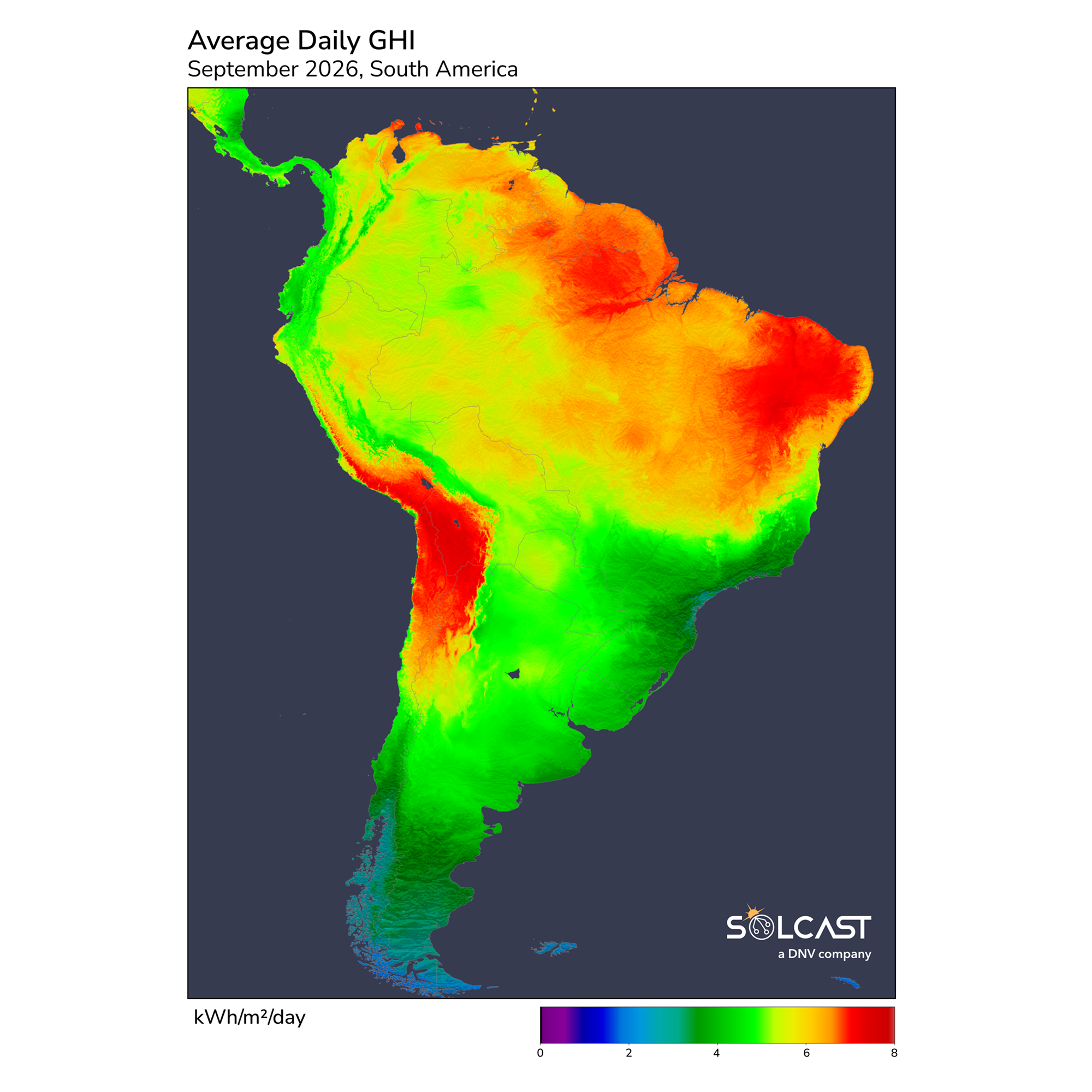
NOAA's Climate Prediction Center continues to issue a "El Niño Advisory" status since June, and forecasts an 80% chance of a strong-to-very-strong event persisting into early 2027. The World Meteorological Organization (WMO) named South America as one of the regions most likely to see major rainfall shifts between September and November. Above-normal rainfall was expected across southern Brazil, while drought and extreme heat risks were rising across the Amazon, Colombia and northern South America.
2015 is the only year in recent history with a September super El Niño. In comparison, 2026 shows similar broad patterns, notably sunnier north, but significant local differences . A small area near Ecuador recorded GHI around 20% above normal. El Niño usually brings more cloud to the eastern tropical Pacific although these effects are typically found in the first part of the year. This is a reminder that while El Niño is a significant climate driver it isn’t the only one and what we observe is a combination of atmospheric drivers. Conditions we see maybe associated with El Niño or La Niña but direct attribution can not be made with certainty.
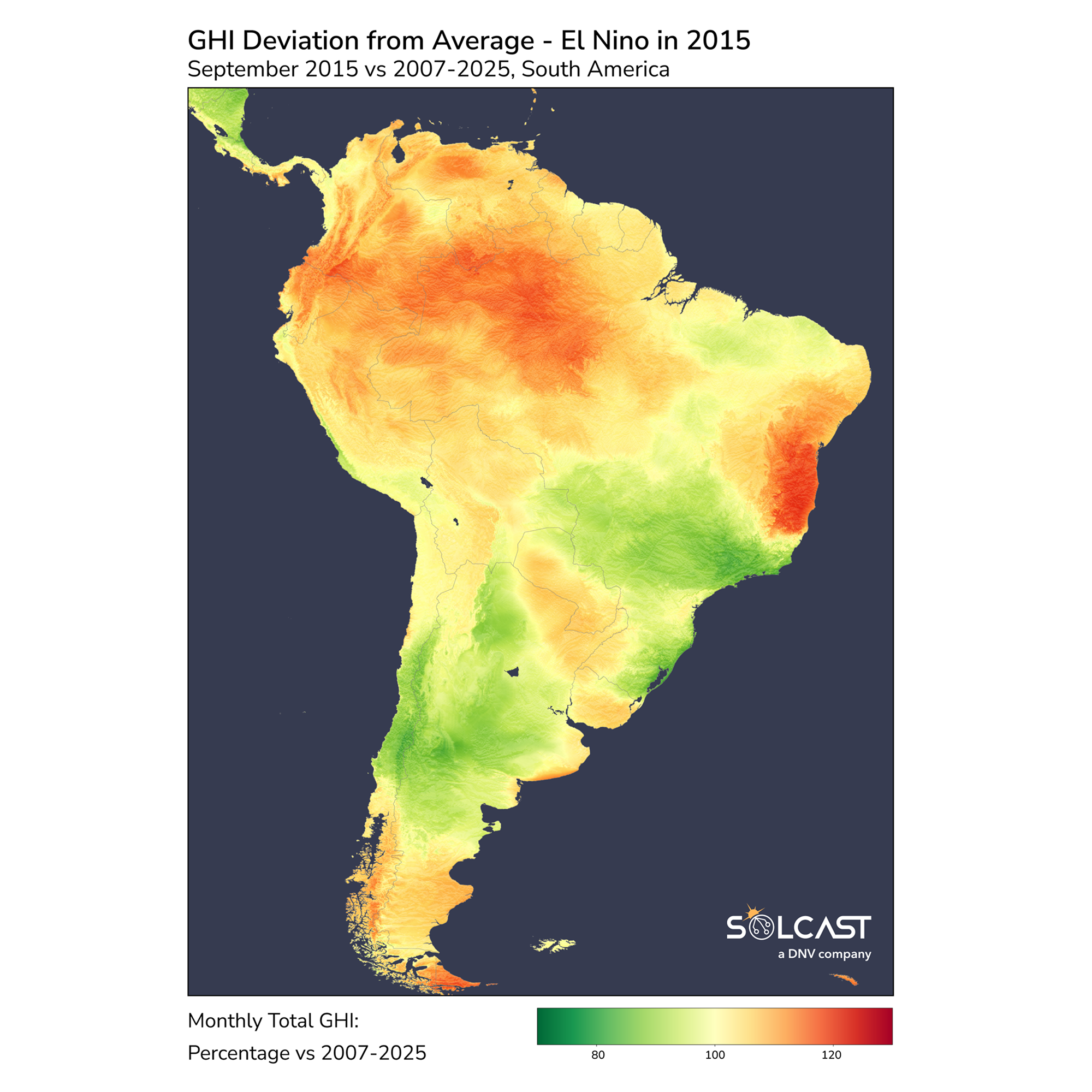
An area of particular contrast to 2015 was in the far south, where there was the deficit over the Patagonian Steppe and Tierra del Fuego was comparable to southern Brazil's, thousands of kilometres away. In contrast, western Patagonia was much sunnier than usual with the Andes creating a literal and figurative divide in the south of the continent.
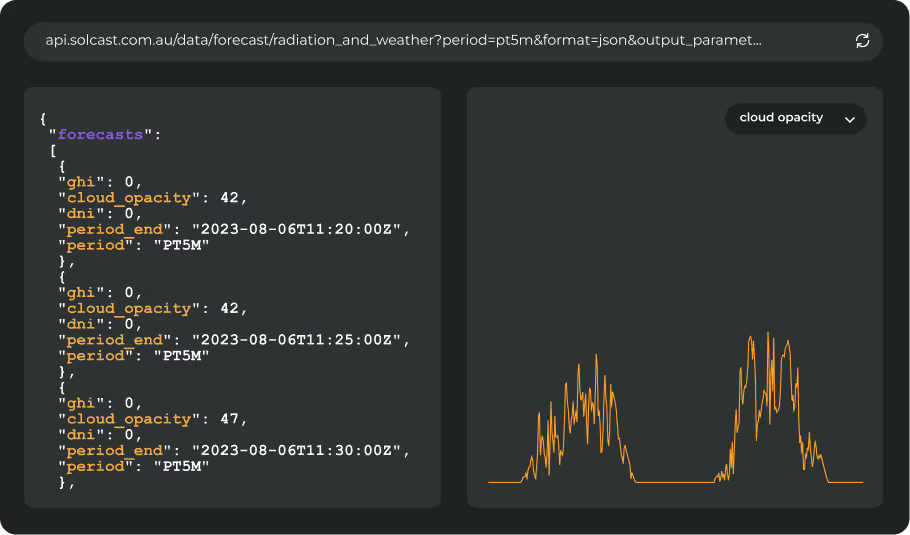
Track weather conditions, cloud movements, and irradiance-influencing factors that might impact your solar generation. Access bankable actuals and accurate forecasts when you sign up for a Solcast API toolkit. You can reach out to our team for an extended trial.

